

Knee Cartilage
Demo Author One
Cartilage repair options for lasting joint health
A practical overview of cartilage repair, injection therapy, rehabilitation planning, and the clinical evidence that guides joint preservation care.
Recovery and rehabilitation
What ACI recovery looks like month by month — crutches, physiotherapy, activity and sport — and how single-stage STACi removes the wait between operations.
 Reviewed byProf Paul Lee MBBch, FRCS (Tr & Orth), PhDLast reviewed 1 May 2026
ACI recovery is gradual and staged. Most patients use crutches for protected weight-bearing for six to eight weeks, begin gentle range-of-motion with physiotherapy early, return to low-impact activity around four to six months, and higher-impact sport from nine to twelve months. ACI also needs a four-to-six-week wait between its two operations — which single-stage STACi removes.
New cartilage cannot be rushed. After ACI, the implanted cells need time to settle, mature and gradually take on the load of the joint. Push too hard too soon and the young repair tissue can be damaged before it is ready; protect it well and it matures into durable, functioning cartilage. That is why ACI rehabilitation is measured in months rather than weeks, and why the timeline is staged — each phase is designed to add load only when the repair can take it. The early pathway is broadly the same for ACI, MACi and STACi, because all three are growing your own cartilage cells into a defect.
Crutches are used to keep weight off the repair, easing back gradually under your surgeon’s guidance. The exact plan depends on where in the joint the defect sits.
Physiotherapy starts early with controlled movement to nourish the cartilage and keep the joint supple, without loading the repair. A continuous passive motion routine may be used for some patients.
Weight-bearing progresses to normal walking, and rehabilitation shifts towards rebuilding the muscle strength lost during the protected phase.
Cycling, swimming and similar low-impact activity typically resume in this window as the repair matures.
Running, pivoting and contact sport are usually the last to return, once the new cartilage is robust enough to take impact.
Every timeline is individual — your surgeon and physiotherapist set your milestones based on your joint, your defect and your progress.
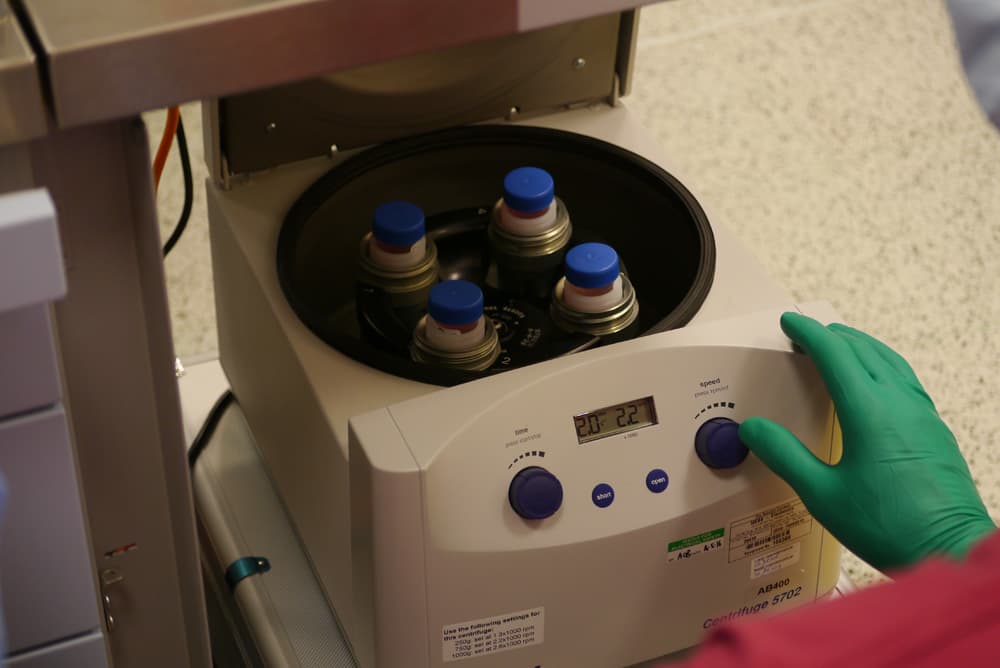
Recovery does not begin at the implantation operation. ACI is a two-stage procedure: first a keyhole operation to biopsy your cartilage cells, then a four-to-six-week wait while those cells are grown in a specialist laboratory, and only then the second operation to implant them. For many patients that gap — two anaesthetics, two recoveries and a period of uncertainty in between — is one of the harder parts of the whole pathway, even though it does not appear on a standard rehabilitation chart.
STACi keeps the same careful, staged rehabilitation — protected weight-bearing, early physiotherapy, a gradual return to activity and then sport — because it is still growing your own cartilage. What it changes is the front of the pathway. In most cases STACi is done in a single operation, with the laboratory step brought into theatre, so there is no four-to-six-week wait between two surgeries and no second anaesthetic. You begin one rehabilitation journey, once.
The rehabilitation after STACi looks much like ACI’s. The difference is that you get there after one operation, not two — which for many patients means a simpler, shorter overall pathway.
Recovery is staged over roughly a year. Protected weight-bearing on crutches usually lasts six to eight weeks, low-impact activity returns around four to six months, and higher-impact sport from nine to twelve months. The new cartilage needs time to mature, so the timeline is deliberately gradual.
Crutches are typically used for six to eight weeks of protected weight-bearing, after which most patients progress to normal walking over the following weeks. Your surgeon sets the exact schedule based on where the defect is in the joint.
Low-impact activity such as cycling and swimming usually resumes around four to six months, while higher-impact sport — running, pivoting, contact sport — generally returns from nine to twelve months, once the repair is robust enough to take impact.
The rehabilitation phase is similar, because both grow your own cartilage. The practical difference is that STACi is single-stage in most cases, removing ACI’s four-to-six-week wait between two operations and the second anaesthetic, which shortens and simplifies the overall pathway.
New cartilage tissue is fragile as it matures and can be damaged if loaded too early. The staged timeline adds weight and impact only as the repair strengthens, which protects the result. Rushing risks the very tissue the surgery was done to create.
Yes. Structured physiotherapy is central to the result — early controlled movement to nourish the cartilage, then progressive strengthening. At London Cartilage Clinic, twelve months of follow-up is included in the STACi pathway.
Still have more specific concerns?
Free Discovery CallA free fifteen-minute discovery call can talk you through what to expect. To map a timeline to your own joint, book a consultation with Professor Lee.
London Cartilage Clinic
Clinical updates, cartilage treatment guidance, and recovery-focused articles from our specialist team.
A practical overview of cartilage repair, injection therapy, rehabilitation planning, and the clinical evidence that guides joint preservation care.
A practical overview of cartilage repair, injection therapy, rehabilitation planning, and the clinical evidence that guides joint preservation care.
A practical overview of cartilage repair, injection therapy, rehabilitation planning, and the clinical evidence that guides joint preservation care.