

Knee Cartilage
Demo Author One
Cartilage repair options for lasting joint health
A practical overview of cartilage repair, injection therapy, rehabilitation planning, and the clinical evidence that guides joint preservation care.

Cartilage cell therapy explained
MACi — matrix-assisted autologous chondrocyte implantation — is a surgery that repairs damaged cartilage using your own cartilage cells, grown in a laboratory and delivered on a thin collagen sheet. It was a real step forward from the original ACi. But it needs two operations, it is designed for the knee, and — importantly if you are in the UK — it is not currently available here as a licensed product. This page explains what MACi is, why its UK availability is limited, and how the modern single-stage STACi does the same job in one operation, for any joint, at London Cartilage Clinic.
 Reviewed byProf Paul Lee MBBch, FRCS (Tr & Orth), PhDLast reviewed 1 May 2026
MACi repairs knee cartilage using your own cells grown on a collagen sheet. It improved on ACi but still needs two operations and is licensed only for the knee. Its European marketing authorisation was suspended in 2014, so it is not currently available in the UK as a licensed product. London Cartilage Clinic offers the modern single-stage evolution — STACi — for any joint.
Verified across three networks
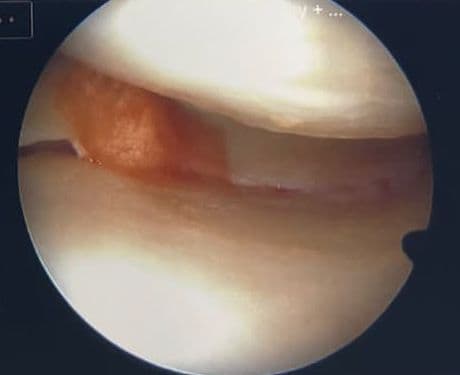
MACi treats a damaged area of cartilage using your own cartilage cells. Cartilage is the smooth, slippery surface that lets a joint glide; once it is damaged it does not usually heal on its own. The cells that build and maintain it are called chondrocytes (pronounced KON-droh-sites).
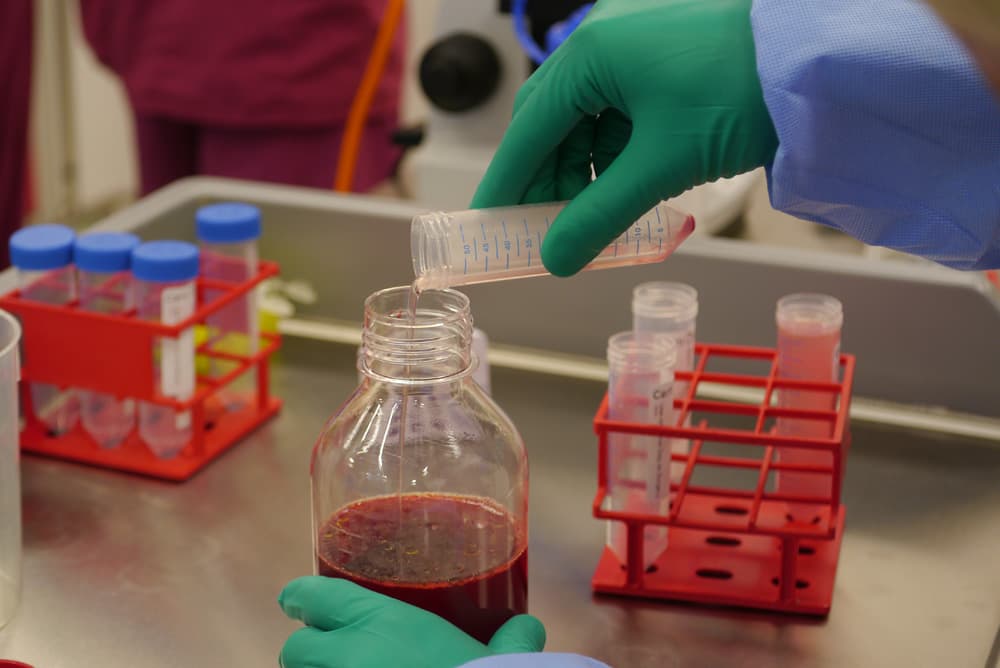
MACi was developed for the knee. A small sample of your cartilage cells is taken from the affected joint, sent to a specialist laboratory to multiply over four to six weeks, then attached to a thin collagen sheet — a flexible membrane made from natural body protein. At a second operation, that cell-loaded sheet is fitted into the damaged area, a bit like patching a worn patch on a tyre. It was an important refinement of the original ACi: instead of harvesting a flap of tissue from your shin to hold the cells in, the collagen sheet carries them directly.
A keyhole biopsy first, then a second operation four to six weeks later to fit the cell-loaded sheet into the damaged area.
Designed for clear holes in the cartilage with healthy tissue around the edges. Licensed for the knee.
The cultured cells are seeded onto a thin collagen membrane, then secured into the defect with a tissue glue (fibrin) or fine sutures.
MACi is proven technology for the right kind of knee cartilage damage. Its limits are the size of defect it can reliably treat, the fact that it relies on a flat 2D sheet rather than a 3D structure, the need for two operations weeks apart — and, in the UK, its availability.
Not currently, as a licensed product. MACi originally held a European marketing authorisation, but that authorisation was suspended in 2014 after the closure of its European manufacturing site. Since then, MACi has been developed and marketed as a US product, where it was approved by the FDA in 2016 — and it is licensed there for the knee only. So a UK patient searching for MACi will generally find that it is not something they can readily have here.
This is one of the main reasons cartilage cell therapy in the UK has moved on. The clinical idea behind MACi — your own cells, delivered on a matrix, to regrow cartilage — is sound and valuable. What has changed is the delivery. The modern, UK-available version of that idea is STACi: it uses a three-dimensional scaffold instead of a flat 2D sheet, treats larger and more complex damage, works across any joint rather than the knee alone, and can be done in a single operation.
Held a European marketing authorisation
EU authorisation suspended (manufacturing site closed)
US FDA approval — knee only
Not available in the UK → STACi is the UK route
If you have read about MACi and want it, the practical route in the UK is to be assessed for STACi — the same principle, delivered in a way that is both more capable and actually available here.
MACi EU authorisation suspended 2014 (EMA Article-20 referral, manufacturing-site closure); US FDA approval 2016, knee only. Read more on MACI UK availability.
STACi keeps everything that works about MACi: it uses your own cartilage cells, grown and placed back into the damaged area to repair it. What it changes is how those cells are delivered. Instead of being attached to a flat collagen sheet, the cells sit inside a three-dimensional scaffold — a sponge-like structure that supports growth in depth as well as across the surface, much closer to the way natural cartilage is actually built.
That one design change lets STACi do everything MACi does, plus what MACi cannot. It suits the same patients MACi was designed for — and also those who would have been turned away because their defect was too large or complex. Because the scaffold approach is reliable across joints, STACi is offered for the knee, hip, shoulder, ankle and beyond, not the knee alone. In many cases it can be done in a single operation, removing MACi’s weeks-long wait between two surgeries — and it is available in the UK, at London Cartilage Clinic.
The single most useful way to picture the MACi-to-STACi step is how the cells are held in the defect.
MACi — 2D collagen sheet
Cells seeded across a flat collagen membrane.
STACi — 3D scaffold
Cells grow through the full depth of a sponge-like scaffold.
| What to compare | MACi | STACi |
|---|---|---|
| How the cells are held in place | Flat 2D collagen sheet | 3D sponge-like scaffold, closer to natural cartilage |
| Number of operations | Two operations | One operation in most cases |
| Range of damage it treats | Best for defects up to ~4 cm² | The same, plus larger and more complex defects |
| Joints it is offered for | Licensed for the knee | Knee, hip, shoulder, ankle and other joints |
| Wait between operations | 4–6 weeks of lab cell growth | None, when done as a single operation |
| UK availability | Not currently available as a licensed product | London Cartilage Clinic only |
The same idea MACi refined, delivered in a way that does more — and that you can actually access in the UK. Read the full STACi page, or compare ACi and STACi.
You may have more options than you think
At London Cartilage Clinic we follow a structured clinical framework across four areas of treatment. Before recommending a single procedure, we assess which combination of approaches gives you the best outcome.
Protect what you have. Slow degeneration and manage symptoms.
Fix specific damage. Torn tissue, unstable joints, structural problems.
Rebuild lost tissue. Biological treatments that stimulate new growth.
When other options are exhausted. Joint replacement as a last resort.
This treatment can be applied across multiple joints. Select yours to see the full range of options we offer, organised by clinical approach.
Explore All Treatment Options
MACi (matrix-assisted autologous chondrocyte implantation) is a two-stage cartilage regeneration procedure. Cartilage cells are biopsied by keyhole surgery, grown in a specialist laboratory over four to six weeks, seeded onto a collagen membrane, and implanted into the prepared defect at a second operation. It is licensed for the knee.
Not currently as a licensed product. MACi’s European marketing authorisation was suspended in 2014 after its EU manufacturing site closed; it is now a US product, FDA-approved in 2016 for the knee only. UK patients who want this kind of treatment are generally assessed for the modern equivalent, STACi. See MACI UK availability.
Because MACi is not currently available in the UK as a licensed product, there is no standard UK price. London Cartilage Clinic offers STACi — the modern single-stage evolution — from £28,000, all-inclusive. See the STACi cost guide and MACI cost in the UK.
STACi delivers the cells inside a three-dimensional scaffold rather than on a flat 2D collagen sheet. That supports growth in depth as well as area, treats larger and more complex defects, can be done in a single operation, works across any joint, and is available in the UK. Read the full STACi page.
Natural cartilage is a three-dimensional tissue with depth and structure. A 2D membrane delivers cells across the surface of a defect but does not support them through its depth. A 3D scaffold gives the cells a framework that more closely mimics real cartilage, supporting more durable regeneration.
Yes. MACi’s outcomes decline as defect size increases, particularly above about 4 cm². STACi was designed to treat larger and more complex defects, including damage that would otherwise be referred for cartilage replacement (OATS, OCA) or earlier joint replacement.
MACi is licensed for the knee. The matrix-assisted principle has been applied to other joints in specialist settings, but at LCC the modern equivalent, STACi, is offered for any joint — so patients enquiring about MACi for a non-knee joint are assessed for STACi.
Book a consultation. The team will review your imaging and history and advise whether STACi, cartilage replacement (OATS, OCA), an injectable scaffold such as ChondroFiller, or a combination is best for your defect.
Still have more specific concerns?
Free Discovery CallThe practical route here is an assessment for STACi — the same principle, more capable, and available. Start with a free fifteen-minute discovery call, or book a consultation to have your imaging reviewed by Professor Lee.
London Cartilage Clinic
Clinical updates, cartilage treatment guidance, and recovery-focused articles from our specialist team.
A practical overview of cartilage repair, injection therapy, rehabilitation planning, and the clinical evidence that guides joint preservation care.
A practical overview of cartilage repair, injection therapy, rehabilitation planning, and the clinical evidence that guides joint preservation care.
A practical overview of cartilage repair, injection therapy, rehabilitation planning, and the clinical evidence that guides joint preservation care.