

Knee Cartilage
Demo Author One
Cartilage repair options for lasting joint health
A practical overview of cartilage repair, injection therapy, rehabilitation planning, and the clinical evidence that guides joint preservation care.
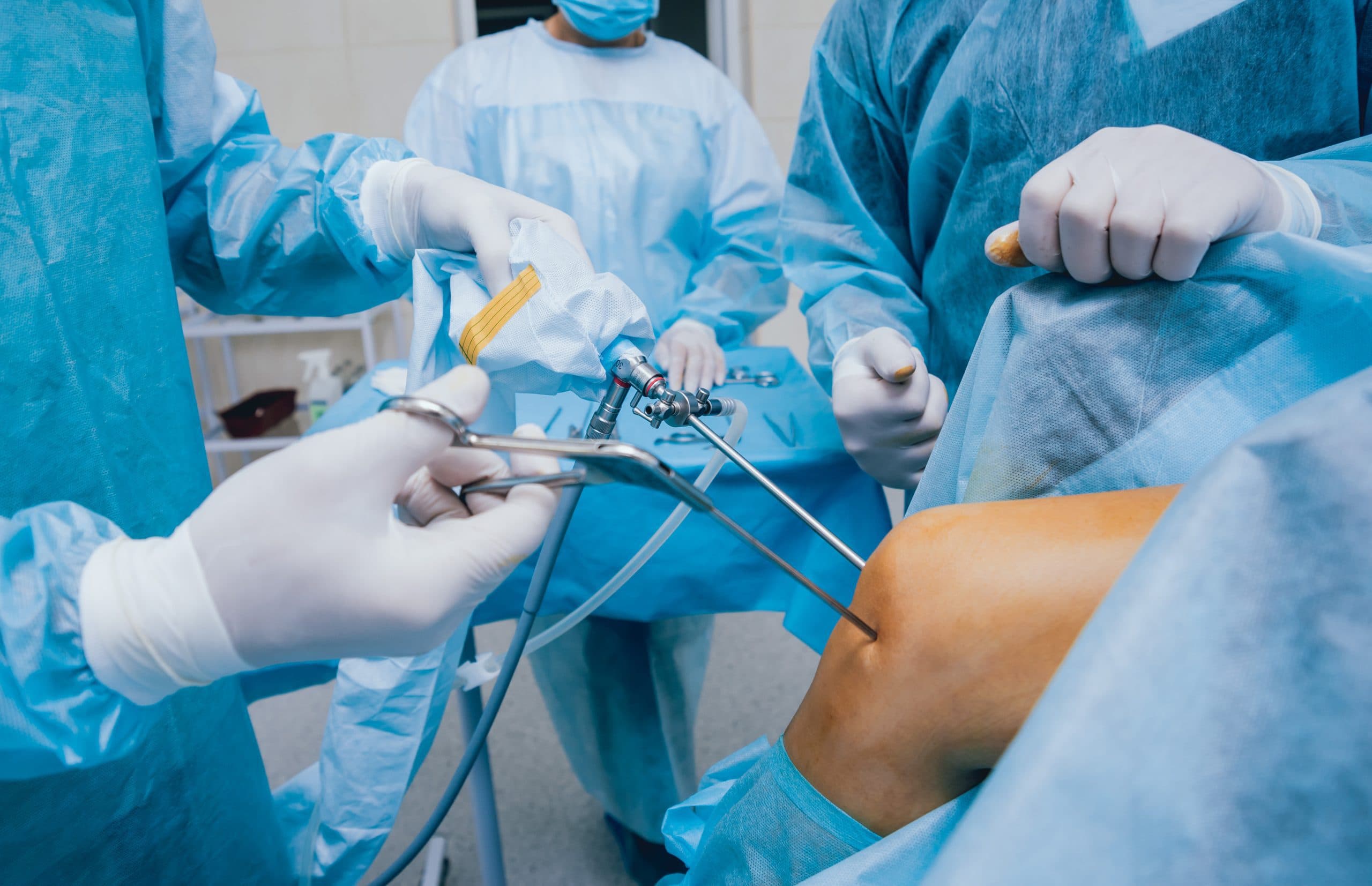
Keep your own joint where you can
If you have been told you need a knee replacement but feel too young or too active for one, this is the page to read first.
 Reviewed byProf Paul Lee MBBch, FRCS (Tr & Orth), PhDLast reviewed 1 May 2026
A knee replacement swaps the worn joint surfaces for metal and plastic. It is the right operation for genuine end-stage, bone-on-bone arthritis — but it is a last resort, and implants wear out, which makes revision hard in younger, active people. STACi is different: for focal cartilage damage before arthritis is end-stage, it rebuilds your own cartilage and preserves your joint.
If your whole joint is worn out, a replacement is the right answer. If the damage is still focal — a defined area, before end-stage arthritis — STACi may let you keep your own knee for longer. The dividing line is what your scan shows.
| What to compare | Total knee replacement (TKR) | STACi |
|---|---|---|
| What it does | Removes the worn joint surfaces and replaces them with metal and plastic implants | Rebuilds your own cartilage using your cells on a 3D scaffold — the joint is preserved |
| Best suited to | Genuine end-stage, whole-joint “bone-on-bone” osteoarthritis | Focal cartilage damage before arthritis is end-stage |
| Your own joint | Removed and replaced | Preserved |
| Age/activity fit | A last resort — harder to justify in younger, very active patients | Designed for younger or active patients who want to keep their joint |
| Longevity | Implants wear out over time; revision in younger patients is difficult | Aims for a durable, living cartilage surface |
| Reversibility | Definitive — the natural joint is gone | Preserves future options, including replacement later if ever needed |
| Cost | From £18,500 | From £28,000, all-inclusive |
This is not “STACi beats replacement”. They treat different stages of the same problem.
“I’ve been told I need a knee replacement” is often the beginning of the conversation, not the end of it. A replacement is the right answer for a joint that is genuinely worn out — but “you’ll need one eventually” is not the same as “you need one now”. If your arthritis is not yet end-stage and the damage is still focal, an assessment can tell you whether keeping your own joint with STACi is realistic. The only way to know which side of that line you are on is to have your imaging reviewed — and being too young or too active for a replacement is precisely why that review is worth having.
STACi is not a substitute for a knee replacement when a knee genuinely needs replacing. For established, whole-joint osteoarthritis, a replacement remains the definitive and appropriate operation, and no cartilage regeneration procedure changes that. STACi’s role is earlier: to treat focal cartilage damage before it becomes end-stage arthritis, and to preserve the natural joint in patients who are not ready for — or not yet suited to — a replacement.

Sometimes, yes — it depends on the stage of your arthritis. If the damage is still focal (a defined area of cartilage loss) rather than whole-joint, end-stage arthritis, STACi can rebuild your own cartilage and preserve the joint. If the joint is genuinely worn out and bone-on-bone throughout, a replacement is the right operation. An imaging review is what tells you which applies to you.
It is reasonable to. “You’ll need a replacement eventually” is not the same as “you need one today”, especially if you are young or active. An assessment can show whether your arthritis is truly end-stage or whether focal cartilage damage could be treated with a joint-preserving procedure like STACi first. Booking a review does not commit you to anything — it simply tells you your options.
Because replacement implants wear out over time. In an older, less active patient a replacement can comfortably last for the rest of their life. In a younger or very active patient, the implant is more likely to wear out and need revising — and revising a knee replacement is more difficult than the first operation, with generally less predictable results. That is why preserving the natural joint, where possible, is preferred in younger patients.
STACi is designed to preserve your own joint by treating focal cartilage damage before it becomes end-stage arthritis, which may delay or avoid a replacement. It cannot guarantee you will never need one, and it is not a substitute for a replacement if your arthritis is already end-stage. Importantly, having STACi preserves your future options, including a replacement later if it is ever genuinely needed.
No — STACi is from £28,000, all-inclusive, and a total knee replacement is from £18,500. They are not really substitutes, though: they treat different stages of joint damage. The right comparison is not price but stage — focal cartilage damage versus end-stage, whole-joint arthritis — which is what the consultation assesses.
Then we will tell you plainly, and talk you through what is appropriate — which may be another regenerative option, or, if your arthritis is genuinely end-stage, a referral pathway toward replacement. An honest assessment is the point: STACi is not right for whole-joint arthritis, and we will not recommend it where a replacement is the better operation.
Still have more specific concerns?
Free Discovery CallIf you have been told a knee replacement is coming but feel too young or too active for one, a fifteen-minute discovery call is free. Or book a consultation to have your imaging assessed by the surgeon who would perform the procedure.
London Cartilage Clinic
Clinical updates, cartilage treatment guidance, and recovery-focused articles from our specialist team.
A practical overview of cartilage repair, injection therapy, rehabilitation planning, and the clinical evidence that guides joint preservation care.
A practical overview of cartilage repair, injection therapy, rehabilitation planning, and the clinical evidence that guides joint preservation care.
A practical overview of cartilage repair, injection therapy, rehabilitation planning, and the clinical evidence that guides joint preservation care.